Why Your Lights Flicker (and When It Is Dangerous)
— Category: Electrical Safety Tips
Flickering lights are the one electrical symptom homeowners both over-react to and under-react to, usually at the wrong times. A single fixture that flickers is almost always a cheap fix you can do yourself. But when every light in the house dims the moment the furnace, the AC, or the dryer kicks on, that is a different animal, and ignoring it can quietly cook the electronics plugged into your walls. The trick is reading the pattern: which lights, and when. We have chased these faults across the Twin Cities for 18 years, and the cause is almost always sitting in one of four places.
If your lights flicker alongside a warm or buzzing panel, a burning smell, or a breaker that keeps tripping, stop reading and call (952) 443-4113. That combination is a live fault, not a troubleshooting project.
Why Do My Lights Flicker?
Start by figuring out how much of the house is affected, because that single observation eliminates most of the list. One fixture is a local problem. The whole house is a service or panel problem. Here are the four causes, from most benign to most urgent:
• Bad bulb or loose connection at the fixture: the number one cause of single-light flicker. A loose bulb, a worn socket tab, or an incompatible LED on an old dimmer. Cheap and harmless.
• Failing dimmer or switch: older dimmers were built for incandescent loads and chatter when paired with modern LEDs. The flicker tracks one switch, not the whole room.
• Overloaded or shared circuit: lights dip when a big motor on the same circuit starts up, a window AC, a vacuum, a space heater. The dip is brief and tied to that one appliance. If that same circuit also keeps shutting the breaker off under load, you are past a flicker and into an overload worth diagnosing.
• Loose service neutral or failing panel: the dangerous one. The whole house flickers, often when a large 240-volt appliance cycles on. This points at a loose connection in the panel, at the meter, or on the utility service drop. It can swing voltage high enough to damage electronics.
The rule of thumb that sorts these fast: if the flicker follows one bulb or one switch, it is almost always benign. If the flicker shows up everywhere at once, treat it as electrical until proven otherwise.
Lights Flicker When the AC or a Large Appliance Turns On
A brief dim when your AC compressor, well pump, or electric dryer starts is partly normal. Big motors pull a large inrush of current for a fraction of a second, and the voltage sags just long enough to make the lights blink. A quick, single dip that recovers instantly, and only on that one appliance, is usually nothing to worry about.
What is not normal is the dim getting deeper over time, lasting longer than a blink, or spreading to lights on circuits far from the appliance. That progression is the classic signature of a loose connection somewhere in the high-current path, the panel lugs, the main breaker, the meter base, or the utility neutral. As the connection corrodes or loosens, the voltage swing gets worse, and that is when sensitive electronics start failing early.
Here is how to triage it before you call anyone:
1. Note which appliance triggers it. If only the AC causes a flicker and it is a clean single dip, watch it but do not panic. A worsening or spreading dim is the flag.
2. Check whether it is whole-house or one room. Walk to a room on a different circuit when the appliance starts. If those lights dim too, the fault is upstream of both circuits, at the panel or the service.
3. Look for a hot or buzzing panel. Carefully feel the cover and listen. A panel that is warm to the touch or humming is telling you the connection is failing under load. Do not open it. Call.
Whole-house dimming that tracks a 240-volt appliance often traces back to a failing or undersized panel, which is why we start at the panel when the whole house flickers rather than chasing individual fixtures. If you are seeing this pattern, talk to a licensed tech: (952) 443-4113.
Whole House Lights Flickering: This Is the One to Watch
When every light in the house flickers together, especially with a momentary brightening before the dim, the most likely culprit is a loose service neutral. The neutral is the return path that balances the two 120-volt legs feeding your home. When it loosens or corrodes, the two legs stop sharing load evenly: one side surges high while the other sags, and your lights flicker, flutter, or even brighten unevenly across the house.
That overvoltage is the real hazard. A neutral fault can push 130 or 140 volts onto a circuit that should see 120, and that is exactly the kind of swing that kills TVs, computers, furnace control boards, and LED drivers months before their time.
The loose connection lives in one of these spots, and the order matters for who fixes it:
• The main panel lugs or neutral bar: inside your panel. A licensed electrician's repair.
• The meter base: where the utility service lands at your home. Usually the electrician, sometimes coordinated with the utility.
• The service drop or transformer: out on the utility side. This is Xcel Energy's or your local co-op's responsibility, not yours and not your electrician's.
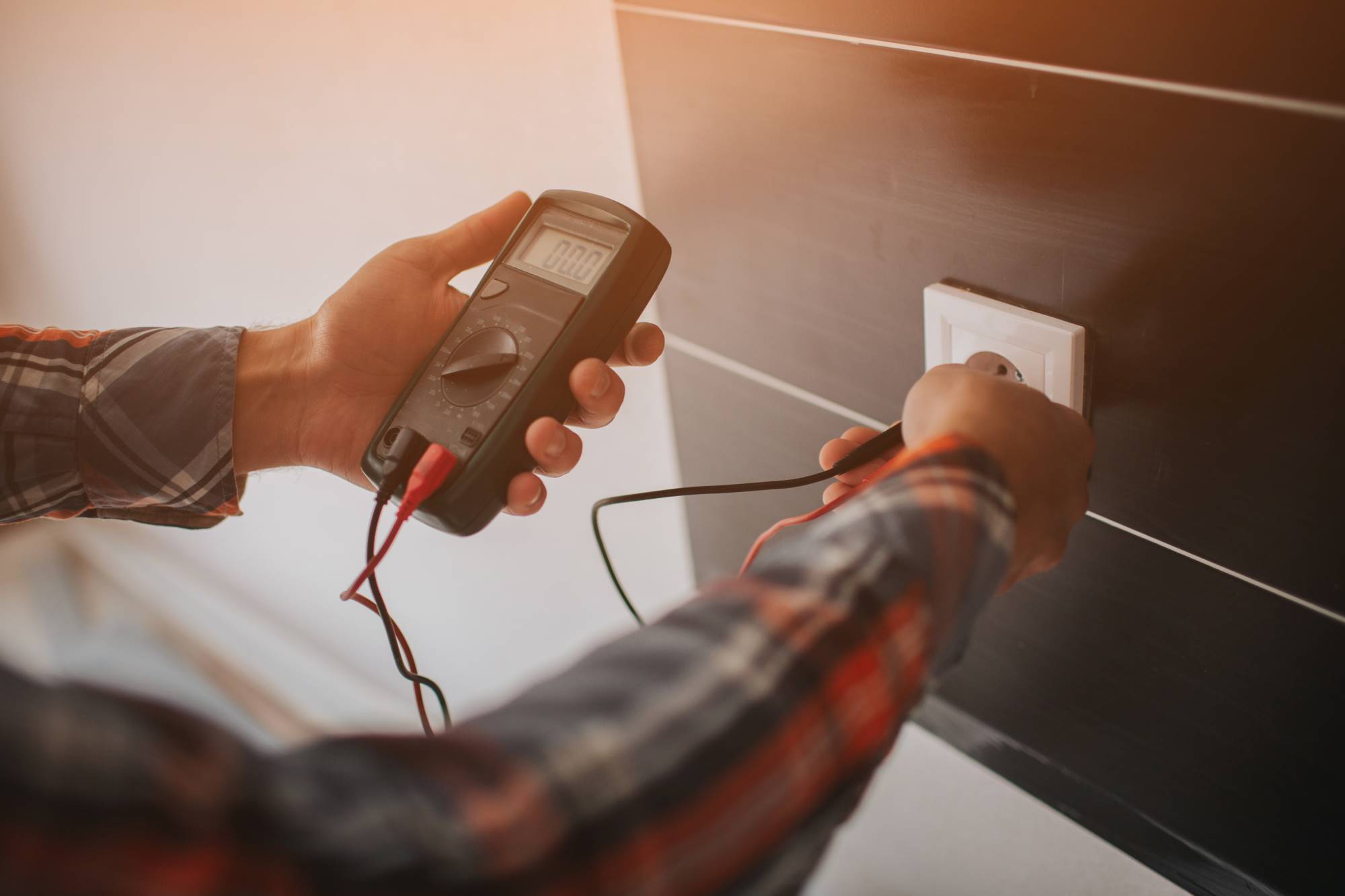
Because the fault can sit on either side of the meter, the first job is finding which side. We use a meter to watch the voltage on both legs while loads switch on and off, which tells us in minutes whether the loose neutral is inside your panel or out on the utility line. If it is utility-side, we tell you to call Xcel and we do not charge you to chase their problem. If it is inside your panel, we trace the actual fault behind the flickering rather than just the symptom and repair the connection at the source.
When This Is Not Your Problem to Fix
Here is the honest part most companies skip: not every whole-house flicker is something you should pay an electrician to chase. If the flicker hits your whole neighborhood at the same time, or shows up only during a storm or a known utility event, that is a grid problem. Call your utility, not us. We would rather tell you that on the phone than send a tech to confirm the obvious on your dime. Pre-1980 south-metro homes on original service equipment are the ones that genuinely need a look, because the connections in that era of panel and meter base loosen with decades of thermal cycling.
How to Fix Flickering Lights You Can Handle Yourself
Plenty of flicker is a fifteen-minute fix, and you should rule these out before calling anyone. Work through them in order, easiest first:
1. Reseat or replace the bulb. Turn it off, let it cool, and snug it into the socket. If it is an LED, try a known-good bulb. A surprising share of "flickering light" calls are a single failing bulb.
2. Check the bulb and dimmer match. Standard LEDs on an old incandescent dimmer flicker and buzz. Either swap to a dimmable LED rated for that dimmer, or replace the dimmer with an LED-compatible model.
3. Tighten the load on a busy circuit. If the flicker only happens when a space heater or vacuum runs, you are overloading the circuit. Move the heavy appliance to another circuit, or have a dedicated circuit added.
4. Watch for spread. If after all of that the flicker is on more than one fixture or one circuit, stop. Multi-circuit flicker is wiring or panel territory, not a bulb.
The line where do-it-yourself stops is simple: if a verified-good bulb on a known-good dimmer still flickers, or the flicker touches more than one circuit, the fault is in the wiring, a connection, or the panel. That is where you bring in a licensed electrician instead of swapping more parts.
FAQ: Flickering Lights
Are flickering lights dangerous?It depends entirely on the pattern. A single bulb or one dimmer flickering is harmless and usually a five-minute fix. Whole-house flickering, flicker that tracks a large appliance and worsens over time, or flicker paired with a warm panel or burning smell is dangerous. That last group points to a loose connection or a failing service neutral that can overheat wiring and damage appliances.
Can flickering lights start a fire?The flicker itself does not start a fire, but the cause behind a serious flicker can. A loose connection in a panel, an outlet, or a junction box arcs and heats up, and arcing inside a wall is a genuine fire risk. That is why whole-house or multi-circuit flicker should be diagnosed rather than ignored, even when nothing looks wrong from the outside.
Why do my lights flicker when nothing is turned on?Random flicker with no appliance trigger usually means a loose connection somewhere in the circuit feeding those lights, a backstabbed outlet, a worn switch, or a loose splice in a box. If it is on a single circuit, it is a wiring connection. If it is house-wide, suspect the panel or the service neutral, and get it looked at.
My whole house flickers but the power company says it is fine. Now what?If the utility has checked their drop and transformer and cleared their side, the loose connection is almost certainly on your side of the meter, in the meter base, the main lugs, or the neutral bar inside your panel. That is a licensed electrician's repair, and it is worth doing promptly because the overvoltage from a loose neutral damages electronics the longer it runs.
Bottom Line
Flickering lights are a pattern, not a single problem. Read which lights flicker and when: one bulb or one switch is almost always a harmless local fix, while the whole house dimming when a big appliance starts is the signature of an overloaded circuit, a failing panel, or a loose service neutral that needs attention before it damages your electronics. Norske Electric, owned by Brevik Tharaldson and licensed in Minnesota (EA005268), has traced these faults across the Twin Cities for 18 years from offices in Hamel and Savage. If your whole house flickers, the panel feels warm, or you smell burning plastic, do not keep guessing, call our 24/7 emergency electricians at (952) 443-4113 and we will tell you exactly what to do next.