Why Your Circuit Breaker Keeps Tripping (And When to Worry)
— Category: Electrical Safety Tips
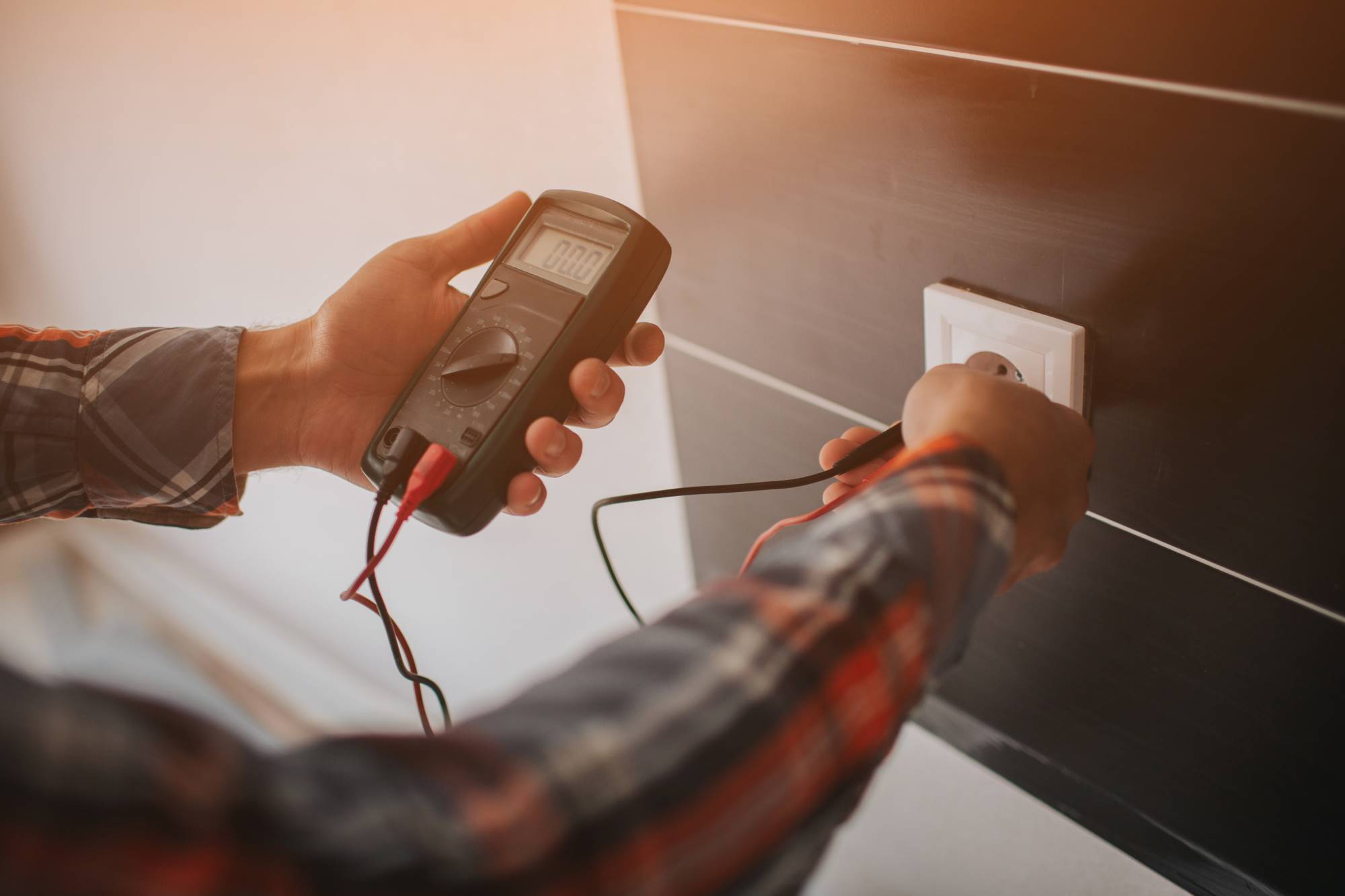
A circuit breaker that keeps tripping is not broken. It is doing exactly what it was designed to do: cut the power before a wire overheats and starts a fire. The real question is why it keeps tripping, because the fix for an overloaded circuit is completely different from the fix for a short circuit, a ground fault, or a breaker that has simply worn out. Get the diagnosis wrong and you either keep resetting a dangerous fault or replace a perfectly good breaker. We have been tracing these faults across the Twin Cities for 18 years, and the same four causes account for nearly every call.
If your breaker will not reset at all, or you smell burning plastic near the panel, skip the rest of this article and call (952) 443-4113. That combination is an emergency, not a troubleshooting project.
Why Does My Circuit Breaker Keep Tripping?
There are only four real reasons, and you can usually narrow it down in a couple of minutes by paying attention to when the breaker trips.
Overloaded circuit — The most common cause by far. Too many devices pulling power through one circuit. The breaker trips after a delay, often when you turn on one more thing (a space heater plus a hair dryer on the same bathroom circuit is the classic Minnesota winter version).
Short circuit — A hot wire touching a neutral or a ground directly. The breaker trips instantly and hard, usually the moment you flip it back on or plug something in. Often comes with a pop, a spark, or a scorch mark.
Ground fault — A hot wire leaking current to ground, frequently through moisture. Common on outdoor outlets, garage circuits, and unfinished basements after snowmelt. Trips a GFCI or GFCI breaker the moment the fault appears.
Failing breaker or undersized panel — The breaker itself is worn out, or the panel was never sized for the load the home now carries. Common in pre-1980 south-metro housing stock with original 100-amp panels feeding a modern all-electric household.
The pattern of the trip tells you which one you are dealing with. A breaker that holds for a while and then trips is almost always an overload. A breaker that trips the instant you reset it is almost always a short or ground fault.
Circuit Breaker Trips Immediately When Reset: What That Means
When a breaker will not hold for even a second, the wiring is telling you something specific, and it is rarely an overload. An overload needs time to heat the breaker's bimetal strip. An instant trip means current is finding a path it should never find.
Here is how to isolate it safely, in order:
1. Unplug everything on the circuit. Walk the rooms that went dark and pull every cord, then try the reset. If it holds now, one of those devices has an internal short. Plug them back in one at a time until it trips again to find the culprit.
2. If it still trips with nothing plugged in, the fault is in the fixed wiring, a switch, an outlet, or the breaker itself. That is not a homeowner repair. The fault is inside a wall or a box where you cannot see it.
3. Check for a GFCI or AFCI breaker. If the breaker has a small TEST button on its face, it is sensing either a ground fault or an arc fault, not a simple overload. An arc-fault breaker that trips repeatedly is often catching a real loose connection arcing inside a junction box.
A breaker that trips immediately with the circuit fully unplugged is a job for professional electrical troubleshooting. We use a clamp meter and an insulation tester to find the fault without tearing open every wall, then quote the repair before we touch it. You will know the number before any work starts.
Overloaded Circuit vs Short Circuit vs Ground Fault
These three get blamed for the same symptom, but they are physically different faults with different fixes. This is the part most homeowners get backward.
Overloaded circuit — Total current draw exceeds the breaker's rating (15 or 20 amps on most home circuits). Nothing is damaged. The fix is redistributing load, or adding a dedicated circuit for the heavy appliance. The breaker is working correctly.
Short circuit — Hot and neutral (or hot and ground) make direct metal-to-metal contact. Current spikes nearly to infinity. The fix is finding and repairing the damaged wire, outlet, switch, or appliance cord. This is a genuine fire hazard.
Ground fault — Current leaks from hot to ground, often through water or a person, in amounts far smaller than a short. The fix is locating the moisture intrusion or damaged insulation. This is the shock-hazard fault GFCI protection exists to catch.
A real diagnostic-first approach matters here, because swapping a breaker on a circuit that is actually shorting just moves the problem. We trace the fault to its actual cause rather than replacing the obvious part and leaving.
How to Reset a Tripped Breaker Safely
Resetting a breaker once is fine. Resetting the same breaker over and over is how a small fault becomes a fire. Do it like this:
1. Turn off or unplug the devices on the dead circuit first. Resetting into a live overload just trips it again and stresses the breaker.
2. Open the panel and find the tripped breaker. It will sit between fully ON and fully OFF, often with a small orange or red marker showing.
3. Push it firmly all the way to OFF first, then back to ON. A breaker will not reset from the middle position. It has to be cycled fully off before it will latch on.
4. If it holds, reintroduce your devices one at a time and watch which one trips it. That device or that circuit is your problem.
5. If it trips again immediately, stop. Do not keep cycling it. Repeated resets into a fault heat the contacts and can weld them. Leave it off and get it diagnosed.
Never tape, wedge, or jam a breaker to keep it from tripping. That defeats the one device standing between your wiring and a fire.
When a Failing Breaker or Undersized Panel Is the Real Problem
Sometimes nothing on the circuit is wrong and the breaker still trips. Breakers are mechanical devices with a finite lifespan, and they weaken with age and with every overload they interrupt. A breaker that trips below its rated load, feels warm, or buzzes has likely failed internally and needs replacement, not another reset.
The bigger pattern we see across older Minneapolis and south-metro homes is a panel that was never sized for how the house is used today. A 100-amp panel installed in the 1970s was plenty for that era. Add an EV charger, a hot tub, central air, and a kitchen full of modern appliances, and that same panel runs maxed out, tripping breakers across multiple circuits as loads stack up. No single circuit is faulty. The whole service is undersized.
When the breaker itself is failing, or the panel is simply too small for the home's load, the honest fix is a circuit panel replacement, not an endless cycle of breaker swaps. We will tell you straight whether you need a single breaker diagnosed and replaced or a full panel upgrade, and we put the price in writing before we start. Call (952) 443-4113 and describe what is tripping, and we will tell you which conversation you are actually having.
When a Tripping Breaker Becomes an Emergency
Most tripping breakers are a nuisance you can schedule around. A few are not. Treat it as urgent and call an emergency electrician right now if a tripping breaker comes with any of these:
• A burning or fishy smell near the panel or an outlet
• A panel that is warm to the touch or buzzing
• Scorch marks, sparking, or crackling at an outlet or the panel
• A breaker that will not reset at all, combined with any smell or heat
Those signs mean a connection is overheating right now, and the breaker may already be losing the fight. Shut off the main if you safely can, keep people and flammables clear, and call (952) 443-4113.
Tripping Breaker FAQ
When does a tripping breaker mean I need an electrician?
Call an electrician when the breaker trips with nothing plugged in, trips the instant you reset it, feels warm or buzzes, or keeps tripping across more than one circuit. Those point to a short, a ground fault, a failing breaker, or an undersized panel, none of which are safe to keep resetting. A one-time trip from plugging in a space heater and a hair dryer on the same circuit is just an overload you can manage yourself.
Is a breaker that keeps tripping dangerous?
The breaker tripping is the safe part. It is preventing an overheated wire from starting a fire. The danger is in two places: ignoring the underlying fault and continuing to reset it, or defeating the breaker by taping or wedging it. A breaker tripping on a true short or ground fault is protecting you from a real fire or shock hazard, which is exactly why you should diagnose the cause instead of fighting the breaker.
How many times can I reset a tripped breaker?
Reset it once after removing the load that tripped it. If it trips again immediately, or trips a second time under normal use, stop resetting and get it diagnosed. Repeated resets into a fault overheat the contacts and can permanently damage the breaker, turning a cheap fix into a panel repair.
Bottom Line
A tripping breaker is a symptom, not the disease. Figure out the pattern first: a delayed trip is usually an overload, an instant trip is usually a short or ground fault, and a breaker that trips warm or below its rating is usually worn out or feeding an undersized panel. Norske Electric, owned by Brevik Tharaldson and licensed in Minnesota (EA005268), has diagnosed these faults across the Twin Cities for 18 years from offices in Hamel and Savage. If your breaker keeps tripping after a reset, or anything near the panel is hot or smells like burning plastic, call (952) 443-4113 and we will tell you exactly what to do next.