Half the House Has No Power? What It Means and When to Call
Updated
— Category: Electrical Safety Tips
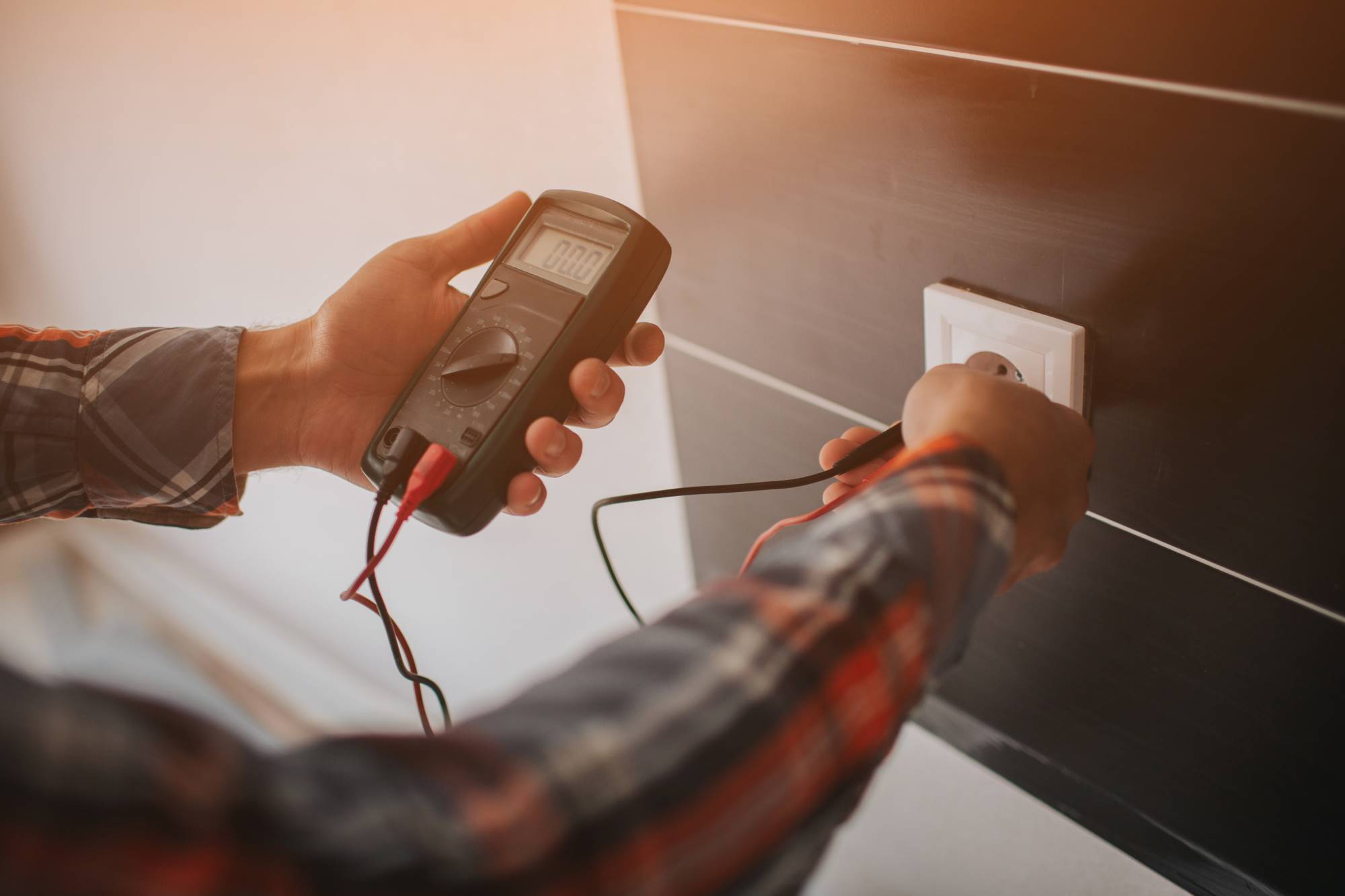
Half the house going dark is not the same problem as a single tripped breaker, and treating it like one is where most homeowners waste an hour. When roughly half your outlets and lights die at once, but every breaker in the panel still looks perfectly normal, you are almost never looking at an overload. You are looking at power loss on one of the two hot legs feeding the panel, or a lost neutral, or a utility-side problem, and those are utility-and-main-breaker territory, not a reset-the-breaker fix. There are two safe checks worth trying. After that, half a dead panel is the point where you stop and call. We have traced these across the Twin Cities for 18 years, from Hamel out through the south metro, and the pattern below covers nearly every call.
Half the House Has No Power: What It Actually Means
Your home is fed by two 120-volt hot legs that combine for 240-volt service, and your panel is split into two columns, each riding on one leg. When one leg loses power, every circuit on that half of the panel goes dark at once while the other half runs fine. That is why "half the house is out" is such a specific symptom. It is not a coincidence of several breakers tripping together. It is one leg down, feeding one whole column of the panel.
Because the breakers themselves never tripped, they all look normal when you open the panel, which is exactly what throws people off. The problem is upstream of the branch breakers: a failed main breaker on one pole, a loose or burned connection at the main lugs, or a utility feed that has lost a leg before it even reaches your meter. None of those show up as a tripped breaker, and none of them are fixed by flipping breakers back and forth.
"When half the panel is dead and every breaker still reads normal, the fault is almost always above the breakers. That is the moment to stop resetting things and start looking at the main and the utility feed."
The two safe checks worth trying first: reset the main breaker once (push it fully to OFF, then firmly back to ON), and check whether your neighbors or your outdoor lights are also affected, which points at the utility rather than your panel. If the main reset restores everything, you had a main breaker that half-tripped and you may still want it checked, because a main that trips on its own is often failing. If the main will not restore one leg, the fault is at the main connections or on the utility side, and both are jobs for a 24/7 emergency electrician, not a homeowner reset.
Power Out in One Room, Breaker Not Tripped
One dead room with every breaker reading normal is a different and much more common problem, and the good news is that two of its three causes are homeowner-safe to check. A single room going dark rarely means a breaker at all. It usually means a protective device or a connection between the panel and that room has opened up.
Work through these in order:
1. Find and reset the GFCI. A single tripped GFCI outlet in a bathroom, garage, kitchen, laundry, or exterior wall can kill power to a whole string of outlets in other rooms that are wired downstream of it. Press the RESET button on every GFCI you can find. This is the number-one cause of "one room is dead and the breaker looks fine," and it is completely safe to check.
2. Check for a wall switch that controls the outlets. In many rooms, especially living rooms and bedrooms, one or more outlets are switched. A flipped wall switch, or a bad switch, can make a whole room read dead. Flip every switch in and near the room.
3. If neither restores power, the fault is a loose or burned connection in a junction box, a failed outlet feeding the rest of the run, or a break in the fixed wiring. That is not a homeowner repair. It is common in pre-1980 south-metro homes where original back-stabbed outlet connections have loosened over decades of heat cycling and finally opened up.
If the GFCI reset and the switch check both come up empty, the room is dead because of a fault in the fixed wiring, and that is where the homeowner checks end. That work is professional electrical troubleshooting: we use a clamp meter and a non-contact tester to trace the break to the exact box without opening every wall, then quote the repair before we touch it. You will know the number before any work starts.
Lost Power to Half the House but Breakers Are Fine
This is the version that scares us the most, because a homeowner staring at a panel full of normal-looking breakers assumes nothing is seriously wrong. Often the opposite is true. When you have lost power to half the house and the breakers are all fine, the most dangerous cause on the list is a lost neutral.
Your two hot legs share a single neutral back to the transformer. If that neutral connection loosens or breaks, the two legs stop sharing return current evenly, and voltage swings wildly. One half of the house sees far more than 120 volts while the other half sees far less. The tell is unmistakable once you know it: lights across the house surge bright then dim as loads switch on and off, dimmers flicker in rhythm, and electronics buzz or reset. A lost neutral will destroy appliances, TVs, and anything with a circuit board, sometimes in minutes.
• Lights surge bright then dim, house-wide. Classic lost-neutral signature. Shut off the main and call now. Do not wait to see if it settles.
• Half the panel is simply dead, no surging. More likely a failed main breaker pole or a lost utility leg. Still an emergency-electrician call, but not the appliance-destroying kind.
• Neighbors are also out, or the outage arrived with a storm. This points at the utility feed rather than your equipment. Report it to your power company, and if the drop or service line to your house looks damaged, keep well clear and call for an emergency assessment.
The reason this belongs in professional hands is that diagnosing it means safely metering voltage across both legs at the main, and working at the service entrance where the wires are still hot even with the main off. A failing main breaker or a split-bus panel that has lost one bus is often the underlying culprit, and when the panel itself is the fault, the honest fix is a circuit panel replacement rather than chasing individual circuits that were never the problem.
When Half-House Power Loss Is an Emergency
Most single-room outages can wait for a scheduled visit. Half-house power loss usually cannot, and a lost neutral never can. Treat it as urgent and reach a 24/7 emergency electrician right now if you see any of these:
• Lights surging bright then dim across the whole house (lost neutral, actively damaging things)
• A burning or fishy smell, warmth, buzzing, or scorch marks at the panel
• Half the panel dead with every branch breaker reading normal and a main reset that does not restore it
• A damaged service line or weatherhead at the outside of the house
Those mean a connection at or above your main is failing right now, or the utility feed itself is compromised. Shut off the main if you can reach it safely, unplug sensitive electronics on the surging half, keep people clear of the service entrance, and call (952) 443-4113.
When you do not need to call us
Honesty first, because a lot of pages will not tell you this. If a single room went dark and pressing a GFCI reset button or flipping a wall switch brought it right back, you fixed it and you owe nobody a phone call. That was a tripped GFCI or a switched outlet doing exactly what it is designed to do, not a fault. Save the call. Likewise, if the power company confirms a neighborhood outage, the fix is on their side, not yours, and there is nothing in your panel to repair.
Half-House Power Loss FAQ
When should I call an emergency electrician for power loss?
Call an emergency electrician the moment power loss comes with a warning sign rather than a simple cause you can clear. That means: lights surging bright then dim across the house, any burning or fishy smell or warmth at the panel, half the panel dead while every branch breaker still reads normal, or a damaged service line outside. Those point at a lost neutral, a failing main breaker, or a utility-side fault, none of which are safe to keep poking at. If a single room went dark and a GFCI reset or a wall switch brought it back, that is not an emergency and you do not need us. Call (952) 443-4113 and describe exactly what is dark and whether any lights are surging, and we will tell you which situation you are in.
Why is half my house without power but the breakers are not tripped?
Because the fault is above the branch breakers, not on them. Your home rides on two hot legs, and the panel is split so each column runs on one leg. When one leg loses power, at a failed main breaker pole, a burned main connection, or a lost utility feed, every circuit on that half dies at once while the breakers themselves never trip. That is why they all look normal when you open the panel. Reset the main once; if that does not restore the dead half, the fault is at the main or on the utility side and needs a licensed electrician.
Can a lost neutral damage my appliances?
Yes, and fast. When the shared neutral between your two hot legs fails, voltage stops splitting evenly. One half of the house can see well over 120 volts while the other half starves. Anything with a circuit board, TVs, computers, furnace controls, refrigerators, can be destroyed in minutes on the over-voltage side. The giveaway is lights surging bright then dim as loads change. If you see that, shut off the main and call right away rather than waiting to see whether it settles.
Bottom Line
Half the house going dark is a specific symptom, and it is rarely a tripped breaker. A single dead room usually traces to a GFCI you can reset or a switched outlet, both safe to check yourself. But half the panel dead with normal-looking breakers means a lost leg, a failing main, or a lost neutral, and lights surging bright then dim means that neutral is failing right now and taking your electronics with it. Those are not reset-the-breaker problems. Norske Electric, owned by Brevik Tharaldson and licensed in Minnesota (MN Lic #EA005268), has traced power-loss faults across the Twin Cities for 18 years from offices in Hamel and Savage. If half your house is dark and the breakers look fine, call (952) 443-4113 and we will find the actual fault and quote it before we touch it. If it comes with a burning smell, heat, or surging lights, treat it as an emergency and call right now. Still working through a single circuit? Start with why your breaker keeps tripping.