Circuit Breaker Won't Reset? Causes and When to Call an Electrician
Updated
— Category: Electrical Safety Tips
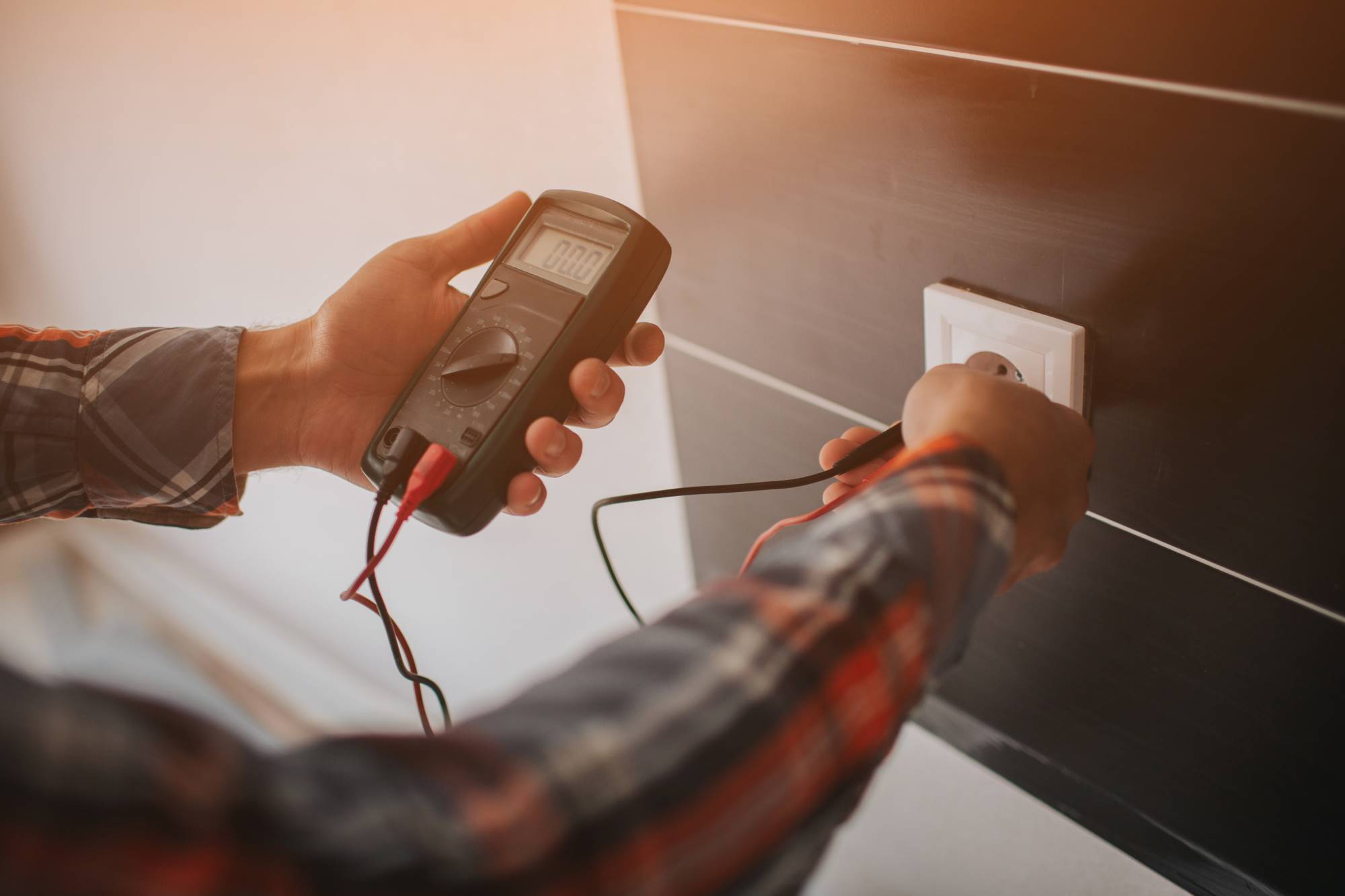
You already tried the obvious fix. You found the tripped breaker, pushed it off, pushed it back on, and it either sprang right back to the middle or refused to hold at all. That is a different situation from a breaker that simply tripped once, and it usually means one of three things: a real fault on the circuit, a breaker that has worn out internally, or an overload you did not clear before resetting. There are exactly two safe checks worth trying yourself. After that, a breaker that will not reset is the panel telling you to stop. We have traced these across the Twin Cities for 18 years, from Hamel out through the south metro, and the same short list of causes covers nearly every call.
Why Won't My Circuit Breaker Reset?
A breaker that will not reset is doing its job under one of three conditions, and you can usually narrow it down in under two minutes. First, you are resetting into a live overload or fault, so the breaker trips again the instant it latches. Second, the breaker never fully cycled to OFF, so it physically cannot re-latch from the middle position. Third, the breaker itself has failed internally and will no longer hold.
Here is the order that sorts it fastest:
1. Push the breaker fully to OFF first, then firmly to ON. A tripped breaker sits between ON and OFF, and it will not latch from that middle spot. It has to be cycled all the way off before it will click back on. This alone fixes a surprising number of "won't reset" calls.
2. Turn off or unplug everything on the dead circuit, then try the reset. If it holds now, you were resetting into a live overload. Reintroduce your devices one at a time to find the one that trips it.
3. If it still will not hold with nothing plugged in, the fault is in the fixed wiring or the breaker itself, and that is where the homeowner checks end.
Those first two steps are safe and worth your five minutes. If the breaker holds after cycling it fully or after clearing the load, you solved it. If it trips the instant it latches with the circuit empty, keep reading, because the next section is the one that matters.
Breaker Trips Immediately When Reset: The Short Circuit Case
A breaker that trips the instant you reset it, with the circuit fully unplugged, is almost never an overload. An overload needs time to heat the breaker's bimetal strip before it trips. An instant trip means current is finding a path straight to neutral or ground, and that is a short circuit or a ground fault. The breaker is catching a genuine fire or shock hazard and refusing to let you power it back up.
"An instant trip into an empty circuit is the wiring telling you the fault is inside a wall or a box, somewhere you cannot see it. That is the point to stop resetting and let someone trace it properly."
This is the hard gate. Repeatedly cycling a breaker into a short heats the contacts and can weld them, turning a diagnosable fault into a panel repair, and it defeats the one device standing between your wiring and a fire. Do not tape, wedge, or jam the breaker to hold it. Finding a short means locating a damaged wire, a failed outlet or switch, or a bad appliance cord hidden inside the fixed wiring, which is exactly the work our circuit breaker repair service is built for. We use a clamp meter and an insulation tester to find the fault without opening every wall, then put the price in writing before we start.
Breaker Won't Reset and No Power to a Room
Sometimes the breaker resets fine but the room stays dark, or the breaker will not reset and a whole room is dead at once. Both point at the same short list, and the pattern tells you which.
• The breaker holds but power is still out. The dead outlets are likely on a GFCI further upstream. A single tripped GFCI outlet in a bathroom, garage, kitchen, or exterior wall can kill a string of outlets in other rooms. Find and reset that GFCI before you touch the panel.
• The breaker will not reset and one room is dead. The fault feeding that room is on the circuit, a shared neutral, a loose connection in a junction box, or a failed outlet arcing. This is common in pre-1980 south-metro homes where original box connections have loosened over decades of heat cycling.
• Multiple breakers or a whole zone is dead. This can point past a single circuit to a shared neutral fault or a panel problem, which is not a single-breaker fix.
If a GFCI reset does not restore the room and the breaker still will not hold, the fault is inside the fixed wiring. Call (952) 443-4113 and tell us which room went dark and whether the breaker trips instantly, and we will tell you which conversation you are actually having.
When It's the Breaker Itself That Failed
Breakers are mechanical devices with a finite lifespan, and every overload they interrupt wears them a little. A breaker that will not reset even with the circuit fully unplugged, or that feels warm or buzzes on its own, has often failed internally. At that point no amount of cycling brings it back, because the fault is inside the breaker, not on the wire.
When the breaker is genuinely dead, the fix is a replacement breaker matched to the circuit and the panel, not a bigger breaker jammed in to stop the trips. Upsizing a breaker beyond the wire's rating removes the protection the wire depends on, which is how a nuisance trip becomes a fire. We will tell you straight whether you need a single replacement breaker or whether the honest answer is a panel that can carry the load, and you will know the number before we pick up a tool.
Is a Breaker That Won't Reset Dangerous?
Here is the honest answer, and it is the one a lot of pages will not give you. A breaker that will not reset is usually the safe part of the situation. It is refusing to send power into a fault. The danger is almost never the breaker itself. The danger is what happens next: forcing it, taping it, or hunting for a bigger breaker to make the tripping stop. Do any of those and you have removed the protection that was keeping a shorted wire from starting a fire.
When you do NOT need to call us: if the breaker resets cleanly after you cycle it fully to OFF and back, or after you unplug an overloaded circuit, you fixed it. That was an overload or a half-latched breaker, not a fault. You do not need an electrician for a breaker that holds fine once you stop overloading it. Save the call. When you should call now: the breaker will not reset with the circuit fully unplugged, it trips the instant it latches, it feels warm or buzzes, or there is any smell, scorch mark, or spark near the panel. Those are shorts, ground faults, or a failing breaker, and none of them are safe to keep fighting. If the breaker will not reset and anything is warm or smells like burning plastic, treat it as an emergency and reach a 24/7 emergency electrician right away.Circuit Breaker Won't Reset FAQ
Is a breaker that won't reset dangerous?
The breaker refusing to reset is the safe part. It is preventing power from reaching a fault. The real danger is in overriding it: taping or wedging the breaker, or replacing it with a larger one to stop the tripping. Both remove the protection standing between a shorted wire and a fire. A breaker that will not hold on an empty circuit is protecting you from a genuine short or ground fault, so the right move is to find the fault, not defeat the breaker.
How much does it cost to replace a bad breaker?
The honest answer is that it depends on what is actually wrong, which is why we diagnose before we quote. Replacing a single failed breaker is a modest, straightforward job. But a breaker that keeps failing is often a sign of a short on the circuit or an undersized panel, and those are different repairs with different numbers. We trace the fault first, tell you whether you are looking at a breaker, a circuit repair, or a panel that has outgrown the house, and we put the price in writing before any work starts. Call (952) 443-4113 and describe what is happening and we will tell you which of those you are facing.
Why does my breaker trip the moment I reset it?
An instant trip on reset, especially with nothing plugged in, means current is finding a direct path to neutral or ground. That is a short circuit or a ground fault, not an overload, because an overload needs time to build heat before it trips. The fault is in the fixed wiring, an outlet, a switch, or an appliance cord, usually hidden inside a wall or box. Stop resetting it. Repeated cycling into a short can weld the contacts and damage the breaker.
Bottom Line
A breaker that will not reset is worth exactly two safe checks: cycle it fully to OFF and back, and clear the load off the circuit. If either brings it back, you are done and you owe nobody a phone call. If it still will not hold with the circuit empty, or it trips the instant it latches, or anything near the panel is warm or smells like burning plastic, stop. That is a short, a ground fault, or a failing breaker, and none of them are safe to keep fighting. Norske Electric, owned by Brevik Tharaldson and licensed in Minnesota (MN Lic #EA005268), has traced these faults across the Twin Cities for 18 years from offices in Hamel and Savage. If your breaker will not reset after those two checks, call (952) 443-4113 and we will find the actual fault and quote it before we touch it. If it comes with heat or a burning smell, treat it as an emergency and call right now. Still troubleshooting the trip itself? Start with why your breaker keeps tripping.