Is Whole-Home Surge Protection Worth It? What It Protects
— Category: Home Electrical Safety
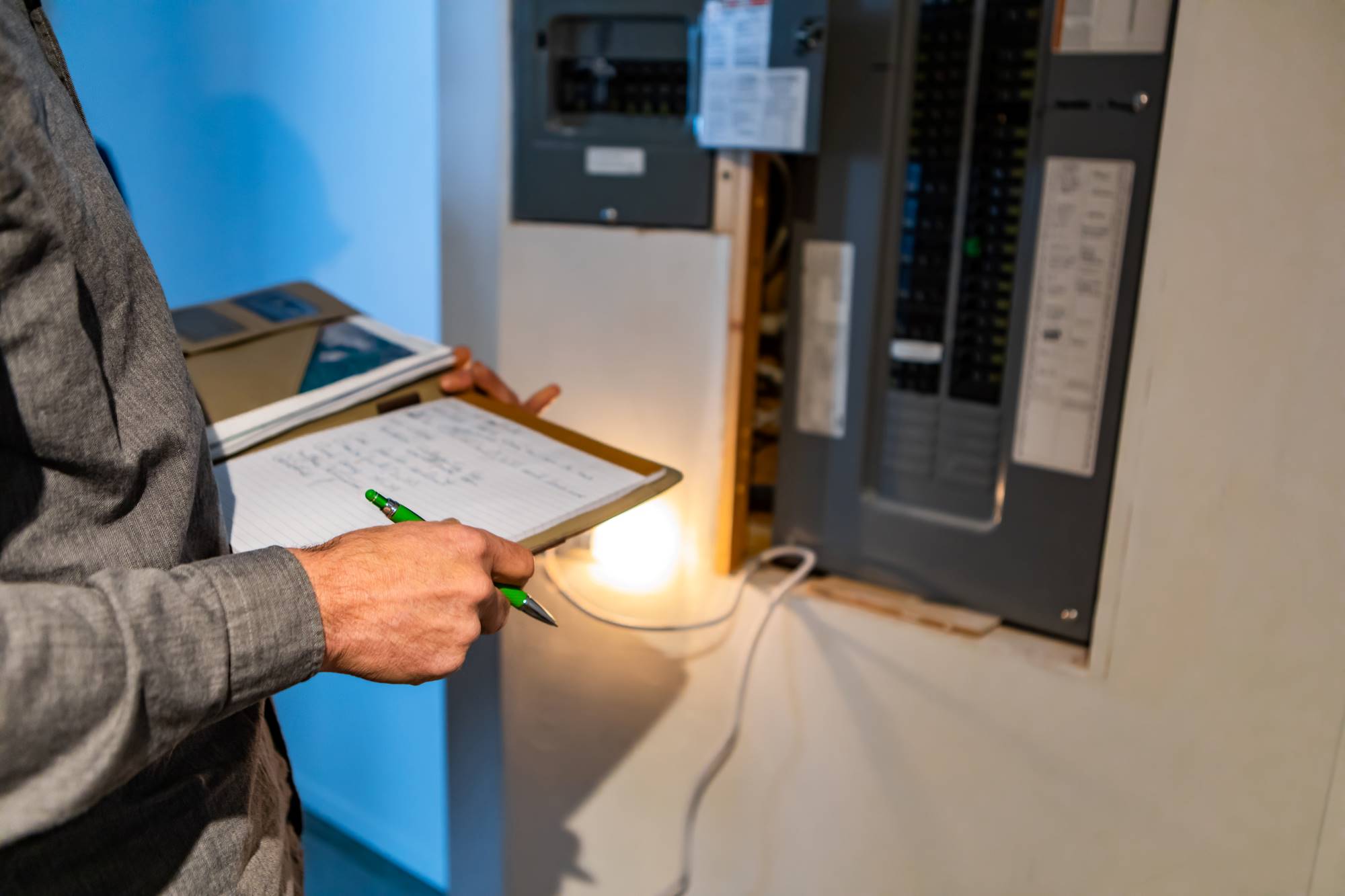
Short answer: for most Twin Cities homes, yes, whole-home surge protection is worth it. The reason it's become a near-default recommendation isn't storms, though Minnesota gets plenty of those. It's that the average home now runs a furnace with a circuit board, a variable-speed AC, a smart thermostat, LED drivers in half the fixtures, and often an EV charger. All of it is sensitive to voltage spikes in a way a 1990s home full of resistive loads simply wasn't. A one-time panel-level device protects that whole list at once. Norske Electric has wired and upgraded Twin Cities panels for 18 years, and the question we get most often is whether this is a real safeguard or an upsell. Here's the straight version.
Here's the part most guides skip. The biggest surges in a home don't come from lightning at all. They come from inside the house, when a big motor like your AC compressor or well pump cycles off and dumps a voltage spike back onto your wiring. Those happen dozens of times a day. A panel-level protector is there for those just as much as for the dramatic storm hit, which is exactly why it earns its keep in a normal year with no lightning strike at all.
Is Whole-Home Surge Protection Worth It?
For most homes built to run modern electronics and appliances, yes. A whole-home surge protector is a one-time device mounted at your electrical panel that clamps voltage spikes before they travel down your branch circuits. The math is simple: it protects your furnace board, AC, appliances, and electronics together, and one surge-damaged HVAC system or appliance control board costs far more to replace than the protector did to install.
The honest version of "worth it" depends on what you've got to lose. A home with a high-efficiency furnace, a variable-speed AC, a Level 2 EV charger, a well pump, and a house full of smart devices has a lot of expensive electronics sitting on the line. A bare-bones rental with a resistive baseboard heater and a couple of lamps has almost none. The more sensitive equipment on your panel, the stronger the case.
When It's Probably Not the Right Call Yet
Here's the part a company trying to maximize the ticket won't tell you: not every home needs this today. If you rent, if your home is genuinely minimal on electronics, or if you're about to replace your electrical panel in the next few months anyway, wait. A protector is best installed at the panel, so it makes sense to fold it into a panel-level device mounted at your electrical panel rather than paying for a standalone visit now and a panel job later. Time it with the panel and you pay one trip charge instead of two.
What Does Whole-Home Surge Protection Protect?
It protects everything downstream of your panel, which is the whole point. A whole-home (or "surge protection for whole house") device sits at the service entrance and clamps a spike before it reaches any individual circuit. That means it covers the hardwired equipment a plug-in strip can never reach: your furnace and AC control boards, the well or sump pump, the dishwasher and range, the garage-door opener, and increasingly the EV charger.
The protected list is longer than most people expect. The things that fail first in a surge are almost always the circuit boards:
• HVAC systems. Furnace control boards and variable-speed AC compressors are among the most expensive surge casualties, and they're hardwired, so a power strip can't touch them.
• Large appliances. Dishwashers, ranges, washers, and refrigerators now run on electronic control boards that fail from voltage spikes.
• EV chargers. A hardwired Level 2 charger is exactly the kind of sensitive, high-value equipment worth guarding. If you've installed or plan to protect sensitive equipment like an EV charger, a panel-level protector covers it alongside everything else.
• LED lighting and smart devices. LED drivers and smart switches are cheap individually but add up across a whole house, and they're surge-sensitive.
"The device people think they're protecting, the TV, is usually the one they'd have on a power strip anyway. The real value is the furnace board and the AC, the hardwired things a strip can't reach."
One honest limit: no surge protector is a guarantee against a direct lightning strike to the house. What a quality panel device reliably handles is the far more common stuff, the utility-side switching spikes and the internal surges from your own motors cycling, which is where almost all real-world surge damage actually comes from.
Whole-Home Surge Protector vs. Power Strip: What's the Difference?
They solve different problems, and you want both. A whole-home surge protector mounts at your panel and shields every circuit in the house, including hardwired equipment. A plug-in power strip (the kind with a surge rating) protects only what's plugged into it, and only up to a much smaller spike. Think of the panel device as the first and largest line of defense, and the strip as a second stage at the most sensitive electronics.
The practical takeaway: a power strip is a fine last stage behind a desk, but it is not a substitute for panel-level protection, and it never protects the expensive hardwired equipment. If you've been relying only on strips, the whole most-valuable half of your electrical system has no surge protection at all.
FAQ: Whole-Home Surge Protection
How much does whole-home surge protection cost?Cost varies with your panel and whether it's done as a standalone visit or folded into other panel work, so we quote it after seeing the panel rather than off the phone. The useful way to frame it: it's a one-time device, and the number is a fraction of replacing a single surge-damaged furnace control board or AC compressor. We'll give you a firm price before any work, and timing it with a panel upgrade avoids a second trip charge.
Does whole-home surge protection protect electronics?Yes, it protects electronics throughout the house, but in layers. The panel device clamps the large spike for everything downstream, including hardwired electronics like your furnace and AC boards that a power strip can't reach. For your most sensitive plug-in gear, a computer or home theater, pairing the panel protector with a quality outlet-level strip gives you two stages of protection. The panel device is the foundation; the strip is the finish.
The Bottom Line
For a Twin Cities home running a modern furnace, AC, appliances, and any EV or smart equipment, whole-home surge protection is a low-cost, one-time safeguard that covers the hardwired gear a power strip never can. It earns its keep on the everyday internal surges, not just the rare lightning strike, and it's cheapest when folded into a panel job rather than done as a one-off. Norske Electric, owned by Brevik Tharaldson and licensed in Minnesota (MN Lic #EA005268), has wired and protected Twin Cities panels for 18 years from offices in Hamel and Savage. Want it sized to your panel? See our whole-home surge protection installation or call (952) 443-4113 and we'll tell you straight whether your home actually needs it yet.