Bathroom & Exhaust Fan Installation: Who to Hire and When
— Category: Home Electrical Upgrades
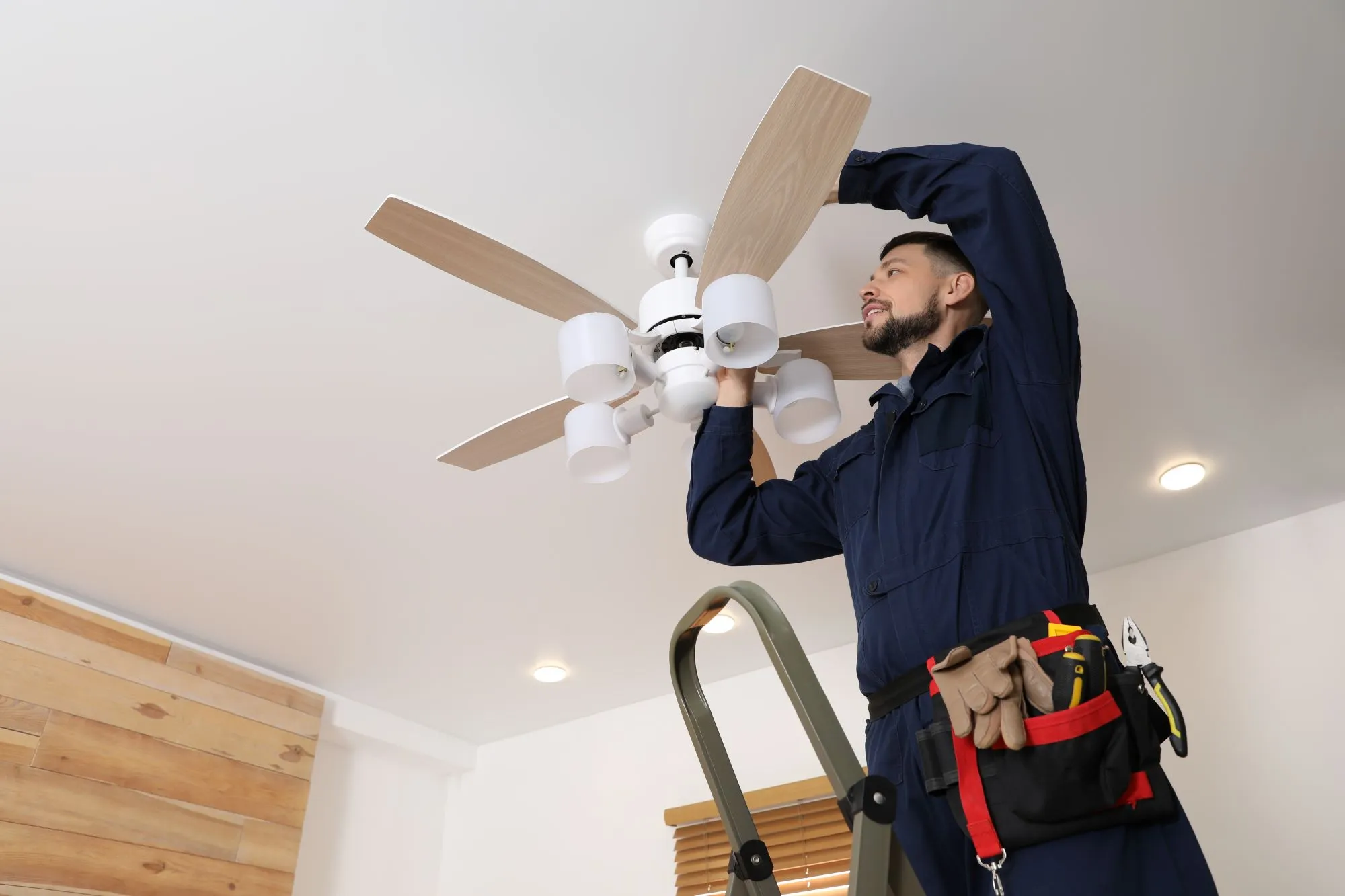
Who Should Install a Bathroom Exhaust Fan?
Search "bathroom fan installers" and you get everyone from handymen to big-box install desks. Here's the honest line we draw after 18 years of this work across the Twin Cities: a straight fan swap that reuses the existing wiring and duct can be a handyman job. Anything that adds a new circuit, a new run of duct, a timer or humidistat switch, or a brand-new fan where none existed needs a licensed electrician. The reason is simple. A bathroom fan pulls line voltage and, in Minnesota, it has to vent to the exterior, not into the attic. Get either wrong and you've traded a $30 rattle for wet insulation, a nuisance breaker trip, or a code failure at resale.
Norske Electric is owned by Brevik Tharaldson and licensed in Minnesota (MN Lic #EA005268), fully insured and BBB A+ rated. When we quote a fan job, we tell you upfront whether it's a swap or a rewire, because those are two different prices and two different scopes of work.
Bathroom Fan Installers vs. Exhaust Fan Installation Service: What's the Difference?
Not much, honestly, and that's worth knowing before you compare quotes. "Bathroom fan installers" and "exhaust fan installation service" describe the same trade work: mounting a ventilation fan, wiring it to a switch, and ducting it to the outside. The label changes with the room. A bathroom fan clears shower moisture. A kitchen or utility exhaust fan clears heat and odor. An attic fan moves air through the roof cavity. All three are ventilation installs, and all three come down to the same three questions we ask on every job.
1. Is there existing wiring and a duct, or are we starting from scratch? A reuse is a swap. A new run means fishing wire and cutting a duct path, which is where the real labor lives.
2. Where does the air actually go? To the exterior through a wall or roof cap. Never into the attic or a soffit, no matter how tempting the short run looks.
3. What controls it? A plain switch, a timer, a humidistat, or a combo. The control choice changes the wiring at the switch box.
If your quote doesn't answer those three, it's not a real quote yet. Talk to a licensed tech who will: call (952) 443-4113.
How Much CFM Do You Need? Sizing a Bathroom Fan by Room Size
CFM (cubic feet per minute) is how much air a fan moves. Undersize it and the mirror stays fogged and the fan runs forever without clearing the room. Oversize it and you're pulling conditioned air out of the house for no reason. The standard sizing rule for a typical bathroom with an 8-foot ceiling is one CFM per square foot, with a 50 CFM floor.
Up to 50 sq ft (a small half bath or a compact full): 50 CFM. — 50 to 100 sq ft (most standard full baths): match the square footage, so a 70 sq ft bath wants roughly 70 CFM.
• Over 100 sq ft, or any bath with an enclosed shower stall, jetted tub, or separate toilet room: size each fixture area separately and add them up. A large primary bath commonly lands at 110 to 150 CFM, sometimes split across two fans.
Two Minnesota-specific notes. First, our winters mean long, hot showers and a lot of moisture load, so we rarely undersize here. Second, a fan is only as good as its duct. A correctly sized 80 CFM fan choked by a crushed 20-foot flex run moves a fraction of its rating, which is why we care as much about the duct path as the fan sticker.
Ducted vs. Recirculating: There's Only One Right Answer for a Bathroom
You'll see "ductless" or "recirculating" ventilation fans sold cheap, and they have a place: an interior kitchen island hood that filters and returns air, for instance. A bathroom is not that place. A bathroom fan's whole job is to move humid air out of the house, and a recirculating unit can't do that, it just stirs the moisture around and pushes it back into the room. Every bathroom fan we install ducts to the exterior through a wall cap or roof cap with a backdraft damper.
The most common failure we find on older installs isn't the fan at all. It's a duct that was never run outside. A previous installer pointed it at the attic or tucked it into a soffit vent, and years of shower moisture soaked the roof sheathing and insulation. In a Minnesota winter that shows up as attic frost, then dripping, then mold and stained ceilings when it thaws. If your fan runs but the bathroom still fogs, or you see any moisture staining on the ceiling around the fan, the duct is the first thing to check.
When to Replace a Bathroom Exhaust Fan vs. Just Re-Vent It
Homeowners often assume a loud or weak fan needs full replacement, and sometimes it does. But just as often the fan motor is fine and the duct is the problem. Here's how we sort it on-site.
Replace the fan when:• The motor grinds, screeches, or hums without spinning up.
• It's a builder-grade unit past roughly 10 years and rated well under what the room needs.
• You want to add a light, a humidistat, or a quieter sone rating the old housing can't take.
Re-vent or repair the duct (not the fan) when:• The fan spins strong but the room won't clear and the mirror stays fogged.
• You find the duct dumping into the attic or a soffit instead of outside.
• Flex duct is crushed, sagging, or full of lint, so airflow is choked.
A quiet way to tell them apart: hold a square of toilet paper to the running fan grille. If it snaps flat against the grille, the motor's pulling fine and your problem is downstream in the duct. If it barely holds, the fan itself is weak. Either way, we'd rather fix the actual cause than sell you a fan you didn't need. That's what our bathroom and exhaust fan installation service is built around.
When the Job Needs a Licensed Electrician (Not a Handyman)
Most people don't think of a fan as electrician work, and for a simple swap they're right. But these four scenarios cross the line into licensed territory, and doing them wrong is where the real trouble starts:
1. A new fan where none existed. There's no wiring in the ceiling yet, so you're adding a circuit or tapping an existing one, plus a new switch. That's line-voltage work behind the wall.
2. A dedicated circuit or a fan/heater combo. Fan-and-heater units draw serious current and often need their own circuit sized to code. Sharing an overloaded branch is how you get a nuisance-tripping breaker.
3. Timer or humidistat switches. These need proper conductors at the switch box, and some need a neutral the old box may not have.
4. Any sign of an existing fault. A fan that sparks, buzzes, smells hot, or trips the breaker when it runs is not a fan problem, it's a wiring problem.
That last one matters most. If the fan sparks, the switch feels warm, or the breaker trips when the fan kicks on, stop using it and call a 24/7 emergency electrician rather than swapping parts. A warm switch is a live-fault warning, not a fan quirk.
One Time You Shouldn't Call Us Yet
If your existing fan works, vents to the outside, and simply isn't the quietest thing in the house, you don't need an installer, you need earplugs or a maintenance clean. Pop the grille, vacuum the dust off the blower wheel and motor, and check the duct for lint. A lot of "failing" fans are just clogged. Do that first. If it's still loud or weak after a real cleaning, then it's worth a call.
FAQ: Bathroom & Exhaust Fan Installation
How much CFM does a bathroom fan need?For a standard bathroom with an 8-foot ceiling, size roughly one CFM per square foot, with a 50 CFM minimum. A 60 sq ft bath wants about 60 CFM; a large primary bath with an enclosed shower or jetted tub often needs 110 to 150 CFM, sometimes split across two fans. In Minnesota we lean toward the higher end because long winter showers put more moisture into the room.
When should you replace a bathroom exhaust fan?Replace the fan when the motor grinds, hums without spinning, or the unit is a builder-grade model past about 10 years and undersized for the room. But if the fan spins strong and the room still won't clear, the fan is usually fine and the duct is the real problem. Check whether it actually vents outside before buying a new fan.
Can a handyman install a bathroom fan, or do I need an electrician?A straight swap that reuses the existing wiring and duct can be a handyman job. You want a licensed electrician when the install adds a new circuit, a fan/heater combo, a timer or humidistat switch, or a brand-new fan where none existed, and any time the old fan sparks, buzzes, or trips the breaker.
Why does my bathroom still get foggy with the fan running?Almost always a duct issue, not the fan. The most common causes are a duct that dumps into the attic or a soffit instead of outside, a crushed or lint-clogged flex run, or a fan that's undersized for the room. Confirm the fan pulls air (the toilet-paper test), then trace where that air actually goes.
The Bottom Line
Bathroom and exhaust fan installation looks simple on the shelf and gets complicated at the ceiling. Size it by CFM, duct it to the outside every time, and know the difference between a fan that's failing and a duct that's choked, so you're not paying for the wrong fix. Norske Electric, owned by Brevik Tharaldson and licensed in Minnesota (MN Lic #EA005268), has installed and re-vented fans across the Twin Cities for 18 years from offices in Hamel and Savage. Ready for a straight installed price? See our bathroom and exhaust fan installation service or call (952) 443-4113 and we'll tell you upfront whether it's a swap or a rewire.